


Evermore Arcade
3.7607.00 Reviews
App Specs
- Version
- 2.2.1
- Updated On
- License
- Free
- Downloads
- 100,000+
- Developer
- Evermore Games LLC
- Categories
- Arcade
- Platform
- Android
Screenshots


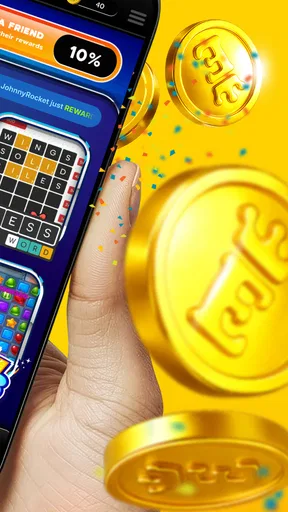





 Analysis by AppCompare
I approached Evermore Arcade as a quick-play arcade game rather than as a traditional single-title experience. Its central idea is simple: play skill-based games and have the chance to earn rewards. That makes the important question less about whether it has a famous character or a long campaign, and more about whether its short sessions, competitive pressure, and reward-focused structure suit the way you like to play.
My first impression is that this is aimed at people who enjoy testing their timing, reactions, and consistency. It is free to start, belongs firmly to the arcade category, and comes from Evermore Games LLC. The game has reached over one hundred thousand installs, with an average rating of 3.8 from roughly two thousand ratings and hundreds of written reviews. Those figures suggest a product with a real audience, but also one that will not appeal equally to every player.
The mature age label matters here. I would not treat this as a family arcade title or hand it casually to a younger player. The reward-oriented concept also means I would approach it with the mindset of playing for entertainment first, not as a dependable way to make money. That distinction is the foundation of my recommendation.
How I would decide whether it fits
Before installing it, I would ask myself what I want from a mobile game. If I need a deep story, character progression, a large world, or a relaxing puzzle experience, this is probably not the natural choice. If I want compact arcade challenges where personal performance is the main attraction, it becomes much more interesting.
The wording around skill is important. A game built around skill rewards is more appealing to me than one that depends mainly on random outcomes, because improvement can come from practice. At the same time, skill-based play can feel demanding. A missed input, a rushed decision, or a poor run may matter more when rewards are part of the motivation. Players who dislike pressure may find the same structure tiring instead of exciting.
I would also consider how I normally use my phone. This is better suited to short breaks than to a long evening of uninterrupted play. I can imagine opening it while waiting for an appointment, taking a few attempts, and putting it away. That makes it a different proposition from an arcade game designed around a single endless score chase, and also from a large premium game that expects a longer commitment.
Another practical point is the platform requirement. The current release is version 2.2.0 and supports Android 8.0 or later. That makes it accessible on many older Android devices, although compatibility alone does not guarantee a perfect experience on every phone. On a smaller screen, precise arcade play can feel less comfortable, and older hardware may make any fast interaction feel less responsive than a newer device.
Worth Reading Before You Choose

EA SPORTS FC Mobile 26 Is a Bigger Football Game, but It Takes Time

Flipboard Shows What News Apps Must Do Beyond the Feed

Switching to Android Auto Means Rethinking Your Driving Routine

Google Calendar Makes a Crowded Week Easier to Manage

Ludo King Makes the Most of the Minutes Between Plans

Baby Panda World Brings Quick Play to Modern Phones, but Its Game Library Feels Busy
The reward idea changes how I play
When a game connects performance with rewards, I naturally become more deliberate. I pay attention to which challenges I can repeat consistently instead of chasing the most difficult option immediately. That is one of my more useful habits with this kind of app: I treat early sessions as practice, then decide whether the time and effort feel worthwhile.
I would recommend keeping a personal boundary before playing. Set a time limit, decide whether you are playing for fun or for the possibility of a reward, and stop when the experience begins to feel like a chore. This is not a criticism of Evermore Arcade specifically; it is simply the healthiest way to approach any game where performance and rewards are placed close together.
I would also read the in-game instructions carefully instead of tapping through them. In a normal arcade title, skipping a tutorial may cost a high score. Here, misunderstanding how a challenge works could make the reward-focused part feel unfair even when the problem is simply that I did not understand the rules. Taking a moment to learn the objective is a small step that can prevent unnecessary frustration.
Who is most likely to enjoy it
I see the strongest fit for players who like measurable improvement. If you enjoy repeating a challenge until your reactions become cleaner, this format can give each attempt a purpose. It may also suit people who want something more active than a passive time-killer but less demanding than a full competitive multiplayer game.
It is also a reasonable option for someone curious about reward-based arcade play but unwilling to pay an upfront purchase price. The game is free, which lowers the barrier to trying it. That does not mean every player will find the time investment worthwhile, but it does make the decision easier: install it, learn the available challenges, and judge the feel for yourself.
I would be more cautious about recommending it to children, players who are uncomfortable with mature-rated content, or anyone who tends to spend too much time chasing a result after a disappointing attempt. I would also skip it if my main goal were a calm game with no pressure attached to performance.
Where Evermore Arcade stands out
The clearest strength is its focused identity. It is not pretending to be a role-playing game, a social world, or a long-form adventure. The appeal is concentrated around arcade skill and the possibility of rewards. That clarity is useful because I know what I am testing when I open it: my ability to perform, not my patience for dialogue or my willingness to manage a complicated inventory.
Compared with a conventional arcade game, the reward angle gives each attempt an extra reason to matter. In a typical score-chasing title, I may stop once I reach a personal best. Here, the possibility of rewards can encourage another run. For some players, that added motivation will make short sessions feel more engaging.
The trade-off is that the same motivation can make losses feel heavier. A failed round is no longer only a missed score; depending on how the game presents its reward structure, it may feel like missed potential. That is why I think the best experience comes from treating rewards as a bonus rather than the sole reason to play.
The game’s audience size also gives me some confidence that it is not an obscure experiment with no player interest. Its average rating of 3.8 is neither a warning sign nor a guarantee of excellence. I read it as a signal to keep expectations balanced: many people are willing to try it, while the experience clearly has enough limitations or variation to prevent universal approval.
Three habits that make the experience better
My first practical tip is to use the opening sessions to identify the type of challenge that matches your natural strengths. Some players are better at quick reactions, while others perform better when they can plan a sequence. If the game offers different styles of skill play, forcing yourself into the wrong type can make the whole app seem worse than it is.
My second tip is to judge consistency, not one spectacular attempt. A single strong run can be exciting, but repeatable performance tells me more about whether the reward-focused format suits me. I would rather find a challenge I can handle steadily than spend all my time restarting after an unusually difficult attempt.
My third tip is to separate practice time from reward-seeking time. I find that this reduces frustration. During practice, the goal is to understand the controls and rhythm. During a later session, I can decide whether I want to pursue the reward opportunity. Mixing both goals from the first tap can make learning feel like failure.
These habits are especially useful in a short-session game. They help me avoid wasting several minutes repeating the same mistake without learning anything from it. They also make it easier to decide whether I am improving or simply being pulled into another attempt.
A realistic everyday session
Imagine I have ten minutes before leaving for work. I open the game, choose a familiar challenge, and spend the first attempt checking whether my hands feel responsive and whether I remember the objective. I then play a few focused rounds rather than jumping between every available option. If my performance improves, I finish on that positive result. If I feel irritated, I close the app instead of turning the break into a frustrating grind.
That is where I think Evermore Arcade makes the most sense: as a contained activity with a clear beginning and end. It can fill a small gap in the day without asking me to remember a complex story or maintain a long-term build. The reward possibility adds interest, but the session remains manageable when I impose my own stopping point.
When another type of game may be better
Players comparing this with other arcade options should separate several categories. A traditional score-based arcade game is usually the better pick if I want a pure personal challenge with no reward expectation. I can focus on improving a score, learning patterns, and enjoying the controls without wondering whether each attempt has an additional outcome.
A casual puzzle game may be better for someone who wants slower decision-making and a softer pace. Puzzle games often let me pause mentally between moves, while skill-based arcade play asks for more immediate attention. If I am tired, commuting in a distracting environment, or looking for something relaxing before bed, the calmer alternative may fit better.
A premium arcade game can also be the stronger choice for a player who dislikes reward-driven motivation. Paying once for a clearly defined experience may feel cleaner than playing a free game where the possibility of rewards influences how long I continue. I am not saying that one model is automatically superior; the right choice depends on whether I value experimentation and accessibility or a more predictable purchase experience.
Competitive multiplayer games offer another contrast. They can provide deeper rivalry and a stronger sense of community, but they usually demand more time, more reliable connectivity, and a willingness to deal with other players. Evermore Arcade is more appealing when I want a self-contained skill test rather than a social contest.
I would also avoid switching to this game expecting the same kind of progression found in a role-playing title. Arcade satisfaction comes from execution and repetition, not from building a character over a long campaign. If unlocking equipment, following a plot, or customizing an avatar is what keeps me playing, another category will probably hold my attention longer.
What switching actually costs
Because the game is free, the financial cost of trying it is low. The more meaningful cost is attention. I need to learn its rhythm, understand how its reward-focused play works, and decide whether the challenges feel fair and enjoyable. If I already have an arcade game that I love, switching only makes sense if Evermore Arcade offers a type of motivation that my current favorite lacks.
There is also a habit cost. Moving from a relaxed arcade title to a reward-oriented one can change the way I measure a session. I may start thinking about results instead of enjoyment. For me, that means I would install it as an experiment, not immediately replace every other game on my phone.
The mature rating is another part of the decision. Anyone choosing games for a shared family device should take that label seriously. It is not enough that the game is free or easy to download; the intended audience matters. Adults who are comfortable with the rating can make their own judgment, while parents should look for a more clearly family-oriented alternative.
The supported operating system makes trying it practical for Android users with a compatible device. Still, I would pay attention to how comfortable the controls feel on my particular phone. Arcade games are unusually sensitive to touch response, screen size, and distractions. If the controls do not feel precise in the first few sessions, I would not force myself to adapt simply because the concept is appealing.
My recommendation after weighing the trade-offs
I recommend Evermore Arcade to adults who enjoy skill-based mobile challenges, prefer short sessions, and like the idea of having rewards as an extra incentive. Its free entry point makes it easy to test, and its arcade focus gives it a clear purpose. The game is most convincing when I approach it as a quick performance-based activity rather than as a replacement for every other kind of mobile entertainment.
I would not recommend it as a guaranteed earning method. The phrase “a chance to earn rewards” should be understood exactly that way: a possibility connected to play, not a promise of reliable income. Anyone installing it mainly for financial return is likely to judge it by the wrong standard and may become frustrated quickly.
My advice is to begin with a short trial session, learn the rules before chasing results, and notice whether improvement feels satisfying on its own. If I enjoy the underlying arcade play, the reward element can make returning more interesting. If I only care about the reward and dislike the challenges, no amount of repetition will turn it into the right game for me.
Evermore Games LLC has positioned this release for a specific audience, and that specificity is both its appeal and its limitation. It is more focused than a general casual game, less story-driven than an adventure, and more reward-conscious than a standard score chaser. For the right player, that creates a compact and motivating arcade experience. For everyone else, a conventional arcade or puzzle game may offer more enjoyment with less pressure.
My final view is positive but measured: try it for the skill-based play, not for an expectation of guaranteed rewards. If you are an adult looking for brief, active challenges and you are comfortable deciding your own limits, it is worth exploring. If you want a family game, a relaxing pastime, or a substantial campaign, I would choose a different category instead.
Pros
- Wide variety of arcade-style games in one app
- Quick sessions make it easy to play on the go
- Simple controls are accessible for casual players
- Nostalgic presentation appeals to classic arcade fans
- Regular challenges can add replay value
Cons
- Some games may feel repetitive after extended play
- Certain features may require an internet connection
- Advertisements can interrupt gameplay for free users
- Progression may feel limited for experienced players
- Device performance can vary across older phones
FAQs for Evermore Arcade
What is Evermore Arcade, and what kind of games does it offer?
Evermore Arcade is a retro-inspired gaming platform focused on bringing classic arcade-style experiences to modern mobile devices. Its collection may include fast-paced action, puzzle, platform, and score-chasing games designed for short sessions. Before downloading, users should check the current app listing because the available game library, features, and supported titles can change with updates.
Is Evermore Arcade free to download and play?
Evermore Arcade may be available as a free download, but the exact payment model depends on the version offered in your region. Some content may be accessible without payment, while additional games, features, or ad-free access could require in-app purchases or a subscription. Review the store page carefully to confirm pricing before installing.
Does Evermore Arcade require an internet connection?
The connection requirements can vary depending on how Evermore Arcade delivers its games and services. Some titles may work offline after installation, while account features, cloud saves, advertisements, leaderboards, or newly downloaded content may require internet access. If offline gaming is important to you, verify the requirements for each included game before relying on the app during travel.
Is Evermore Arcade suitable for children?
Evermore Arcade may be appropriate for many players because arcade games are generally simple to understand, but suitability depends on the individual titles, advertising, purchases, and online features included in the app. Parents should review the age rating, privacy information, and available parental controls. It is also advisable to disable unauthorized purchases on a child’s device.
What devices are compatible with Evermore Arcade?
Compatibility depends on the operating system, device model, available storage, and the minimum software version required by the current release. Older phones or tablets may experience slower performance, longer loading times, or limited access to certain games. Before downloading, check the official Google Play or App Store listing for supported versions and make sure your device has enough free space.


